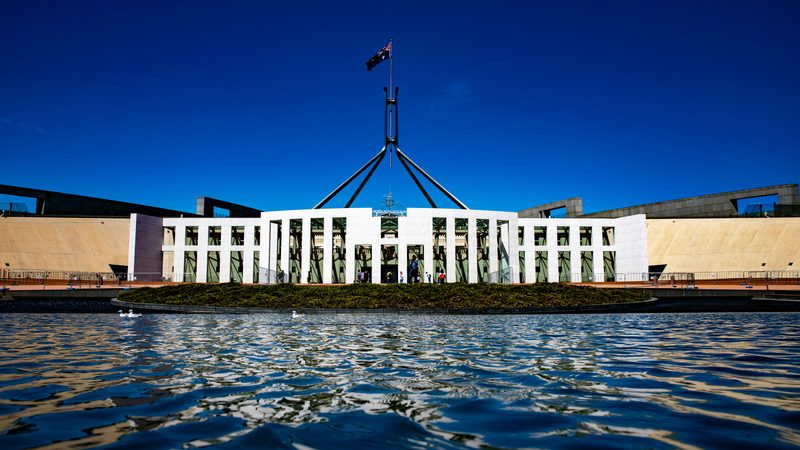
 Photograph by Marcus Reubenstein.
Key takeaways
- The date is 1 January 2027. It is Act No. 72 of 2026 now: sections 1 to 4 commenced on Royal Assent, 26 August 2026, and Schedule 5 the day after. Schedules 1 to 4, which is where the ban sits, commence on 1 January 2027.
- What changes is a definition. Schedule 4, items 10 and 11, amend section 8D of the Interactive Gambling Act 2001 to take foreign-matched lotteries out of the meaning of an excluded lottery service.
- A foreign-matched lottery is defined by where the draw happens. It is one where the prizes are determined by the outcome of a lottery conducted outside Australia.
- Nothing is grandfathered. The only transitional provision the Bills Digest records is Schedule 5, item 4, covering wagering advertising on uniforms and at venues until 31 December 2031. There is nothing of that kind here.
- The government's own review did not recommend a ban. It could not identify a different harm profile or customer spending profile for these lotteries, and recommended extending the credit card ban and doing more research instead.
What changed, and when
Updated as at 3 October 2026: this is now an Act. The Interactive Gambling Amendment (Gambling Reform) Act 2026 is Act No. 72 of 2026. Following the bipartisan agreement of 18 August 2026 it passed both Houses on 19 August and received Royal Assent on 26 August 2026.5 The Department of Infrastructure states that the reforms commence from 1 January 2027, and lists addressing harmful and emerging online lottery products among them.6 The commencement clause splits the Act three ways: sections 1 to 4 commenced on Royal Assent, Schedules 1 to 4 commence on 1 January 2027, and Schedule 5 commenced the day after Royal Assent.1
Schedule 4 is the one that matters here. Items 10 and 11 amend section 8D of the Interactive Gambling Act 2001, which is the provision listing the lottery services excluded from the Act's prohibitions. They remove foreign-matched lotteries from it. A foreign-matched lottery, as the Bills Digest sets out the definition, is one where the prizes are determined by the outcome of a lottery conducted outside Australia.1
One thing here is still not confirmed, and we will not write it as though it is. Royal Assent is settled and so is the commencement date. The item-level detail is not: it comes from the Bills Digest, read as at 21 August 2026, which describes the Bill as introduced on 2 July 2026, before the amendments agreed on 18 August. Those item numbers want reading against the Act as registered, Act No. 72 of 2026, on the Federal Register of Legislation.2
Can I still play US Powerball from Australia?
Today, yes, by the same route as before: an Australian lottery conducted by a Northern Territory-licensed operator, matched to the overseas draw, with the operator buying a ticket in that draw. Schedule 4 has not commenced, and does so on 1 January 2027. Sections 1 to 4 commenced on Royal Assent, 26 August 2026, but they are the machinery of the Act rather than the ban.
What happens after that date to any particular operator is a question for the Australian Communications and Media Authority or a qualified lawyer. We are not lawyers and we are not going to answer it here. What we can say is what the amendment does to the definition, and what the definition covers.
What happens on 1 January 2027?
Schedule 4 commences. From that date the section 8D list of excluded lottery services no longer includes foreign-matched lotteries, which the amendment defines as lotteries where the prizes are determined by the outcome of a lottery conducted outside Australia.
Every overseas game covered on this site answers to that description. USA Power Lotto, USA Mega Lotto, UK Lotto, Irish Lotto, European Millions and Italian Super Jackpot are all matched to a draw conducted outside Australia: that is the entire mechanism, and it is why they exist. Whether a particular operator may continue to offer them, and in what form, is the part we are leaving to ACMA.3
What happens to money already in an account?
The legislation does not say, and that is the honest answer rather than a hedge. The Bill contains one transitional provision, Schedule 5, item 4, and it covers wagering advertising on uniforms and at venues until 31 December 2031. There is no equivalent for foreign-matched lotteries: no transition period, no wind-down, nothing about balances, open entries or unclaimed prizes.1
So what happens to a balance is a matter for the operator's own terms and for its Northern Territory licence conditions, not for this Act. Anyone with money sitting in an account has until the end of 2026 to read those terms and decide what they want to do, which is a longer runway than most regulatory changes give anybody.
Why it was banned, when the review said not to
This is the part of the story that has gone almost entirely unreported, and it is the reason this article exists.
The government did not legislate blind. It commissioned a review into the regulation of online keno and foreign-matched lotteries, which reported in 2026. On the central question, whether these products are more harmful than the Australian lotteries sold alongside them, the review could not identify a different harm profile. It could not identify a different customer spending profile either.4
What it recommended was extending the credit card ban to cover them, and further research. Not a prohibition. The prohibition in Schedule 4 goes past what the government's own evidence-gathering exercise asked for, and the gap between the two is a matter of record rather than a matter of opinion.
None of that makes the ban wrong. Parliaments legislate ahead of evidence often, sometimes for good reasons, and a review is advice rather than an instruction. But a reader deciding what to do before January is entitled to know that the reasoning is not "the review found harm", because it did not.
Who wanted it, and who did not
The Charity Lotteries Alliance and the Australian Lottery and Newsagents Association supported the ban. Both represent sellers of Australian lotteries, which is worth stating plainly rather than treating as a hidden motive: they said what they wanted and who they are is on the record.
The Northern Territory Government opposed it. Its position was that a ban is unsupported by the available evidence, that it would be a disproportionate regulatory response, and that it would push customers towards unlicensed offshore operators. Global Players Network, which holds the Northern Territory licence behind the matched-ticket lotteries sold in Australia, made similar arguments.4
The Northern Territory is also the jurisdiction that licenses these operators and collects from them, so it is not a neutral party either. Both sides of this had something at stake, and the review sitting between them found no difference in harm.
What this does to the pages on this site
For now, nothing changes. Our results and next-draw pages for the six overseas games carry on as they are, because the games carry on as they are until Schedule 4 commences.
What we have done is put the date on the page that explains the model, so nobody reads it in December and thinks the position is settled. Playing overseas lotteries from Australia now carries a reform watch section stating what passed, when Schedule 4 commences and what could not be confirmed. This article and that section are wired to the same review date, so both go stale on the same day rather than one quietly outliving the other.
Royal Assent landed on 26 August 2026 and this article was rewritten for it. If the registered Act says something different from the digest, or the position changes before January, both get rewritten again. That is the deal with anything dated.
The straight version
Parliament has banned foreign-matched lotteries, effective 1 January 2027, with no transitional arrangement. The definition turns on where the draw happens, and every overseas game on this site is matched to a draw held somewhere else.
The government's own review could not find that these lotteries harmed anyone differently from the ones sold beside them, and recommended more research rather than a ban. It got a ban: Act No. 72 of 2026, assented 26 August 2026, with Schedule 4 commencing 1 January 2027. The item numbers still need checking against the registered Act.
If you have money in an account, you have until the end of the year, and the operator's terms rather than this Act are what govern it.
References
- Parliamentary Library, Bills Digest No. 8, 2026-27, dated 7 August 2026, on the Interactive Gambling Amendment (Gambling Reform) Bill 2026. The commencement clause, the Schedule 4 amendments to section 8D, the definition of a foreign-matched lottery and the Schedule 5 item 4 grandfathering are all from this digest. Cited by name, number and date rather than by link, because the digest could not be reached to confirm its address. ↩ ↩ ↩
- Federal Register of Legislation, where the Act as registered and its actual commencement appear, and the place to confirm the item numbers above: legislation.gov.au ↩
- Australian Communications and Media Authority, which administers the Interactive Gambling Act 2001 and is the right place to check the position for a particular service: acma.gov.au/about-interactive-gambling-act ↩
- Review into the regulation of online keno and foreign-matched lotteries, 2026, on the absence of a distinct harm profile or customer spending profile, its recommendation to extend the credit card ban and undertake further research, and the positions put by the Charity Lotteries Alliance, the Australian Lottery and Newsagents Association, the Northern Territory Government and Global Players Network. Reported via Bills Digest No. 8, 2026-27. ↩ ↩
- Parliament of Australia, bill page for the Interactive Gambling Amendment (Gambling Reform) Bill 2026, showing Status: Act, passage of both Houses on 19 August 2026 and Royal Assent on 26 August 2026 as Act No. 72 of 2026. Read 3 October 2026 and supplied by the site owner, because the page could not be reached from the refresh environment to confirm its address. ↩
- Department of Infrastructure, Transport, Regional Development, Communications and the Arts, gambling reforms page, on the reforms commencing from 1 January 2027 and on addressing harmful and emerging online lottery products being among them. Read 3 October 2026, and cited by name for the same reason. ↩